Introduction
A few years ago, online learning was often seen as a backup option. Students usually preferred traditional classrooms because online courses felt less interactive and sometimes difficult to follow. Many learners struggled to stay motivated, organize their study schedules, and get quick answers when they needed help.
Today, the situation is very different.
Recently, I spoke with a college student who told me that some of his most effective study sessions now happen online. Instead of spending hours searching through textbooks and videos, he uses AI-powered learning tools that explain concepts, create practice questions, and help him identify weak areas.
What surprised him most wasn’t the technology itself. It was how much time he saved.
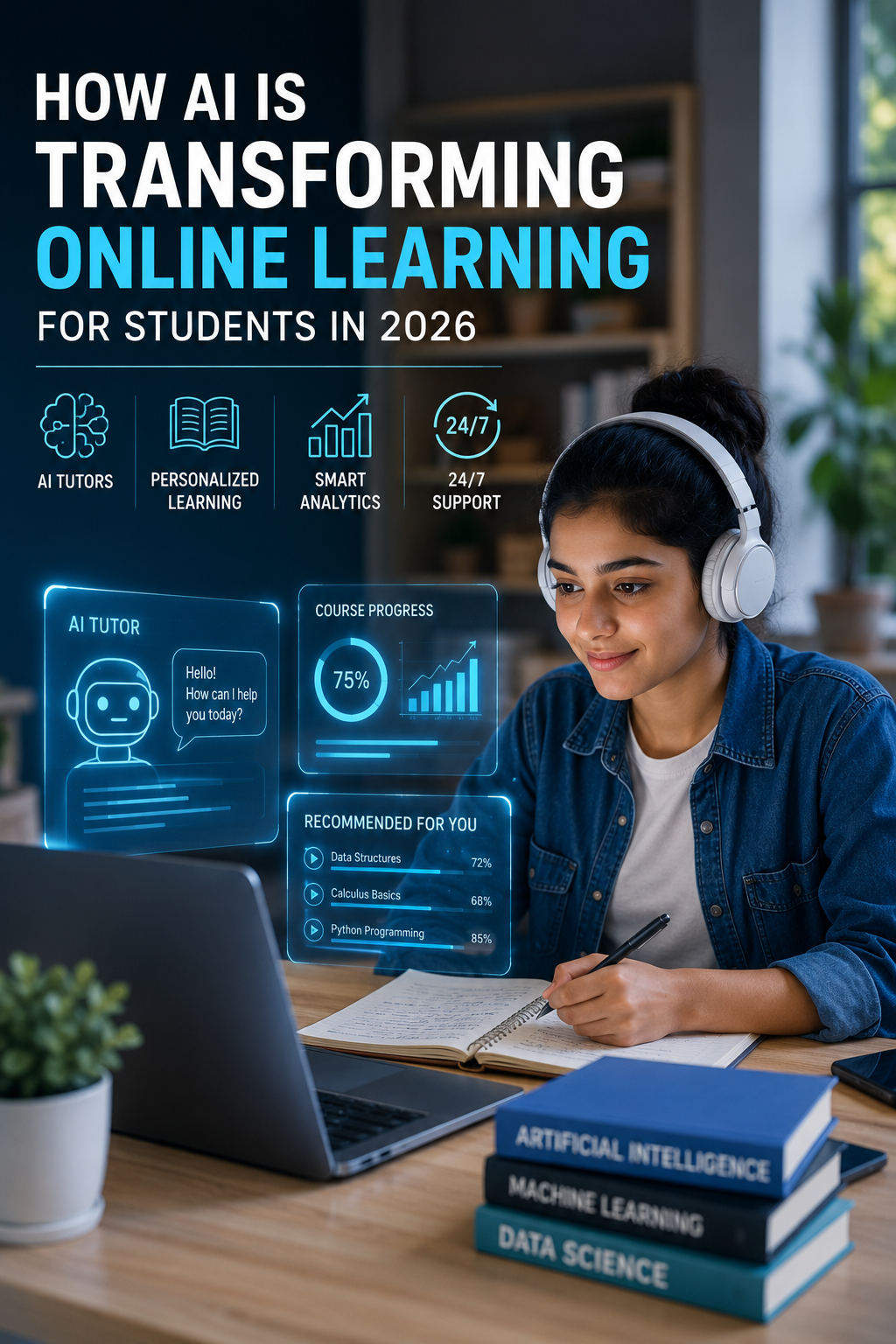
This is one reason why artificial intelligence is becoming one of the most important developments in modern education. AI is helping students learn more efficiently, making online education more personalized, interactive, and accessible than ever before.
As online learning continues to grow, AI is playing a major role in shaping how students study, practice skills, and achieve academic success.
Why Online Learning Is Growing Rapidly
Online learning offers flexibility that traditional classrooms cannot always provide.
Students can:
- Learn from anywhere
- Study at their own pace
- Access global educational resources
- Review lessons multiple times
However, online learning also presents challenges.
Some students struggle with motivation. Others find it difficult to stay organized or understand complex topics without direct support.
AI is helping solve many of these problems.
By providing personalized assistance and instant feedback, AI makes online learning more effective and engaging.
Personalized Learning Experiences
One of the biggest advantages of AI in education is personalization.
Every student learns differently.
Some students understand concepts quickly, while others need additional explanations and practice.
Traditional classrooms often follow a single learning path for everyone. AI-powered platforms can adapt lessons to individual needs.
For example:
- Faster learners can move ahead more quickly.
- Students who need help can receive extra exercises.
- Difficult topics can be explained using different methods.
This creates a learning experience that feels more tailored and supportive.
AI Tutors Are Available 24/7
One common challenge for students is getting help outside classroom hours.
Teachers and tutors are not always available when questions arise.
AI-powered tutors help fill this gap.
Students can ask questions at any time and receive immediate explanations.
Whether it’s mathematics, science, history, or language learning, AI tools can provide additional guidance when needed.
While human teachers remain essential, AI tutors offer convenient support between lessons.
Faster Access to Information
Finding reliable information used to require significant research.
Today, AI-powered search and learning tools can quickly summarize topics, explain concepts, and organize information.
This helps students spend less time searching and more time learning.
For example, instead of reading multiple articles to understand a topic, students can receive structured explanations that simplify complex subjects.
This can improve efficiency and reduce frustration.
Improved Study Planning and Time Management
Many students struggle with time management.
Assignments, exams, projects, and personal responsibilities can become overwhelming.
AI-powered productivity tools help students:
- Create study schedules
- Set learning goals
- Track progress
- Prioritize tasks
One observation I’ve made is that students often perform better when they have a clear study plan.
AI helps create that structure by turning large goals into manageable steps.
Interactive Learning Experiences
Modern students expect more than static lessons and long reading materials.
AI supports interactive learning through:
- Adaptive quizzes
- Personalized exercises
- Simulations
- Learning games
- Instant feedback systems
These features help keep students engaged and improve knowledge retention.
Learning becomes more active rather than passive.
Supporting Different Learning Styles
Not everyone learns in the same way.
Some students prefer visual explanations.
Others learn better through reading, listening, or practical activities.
AI-powered platforms can adapt content to different learning preferences.
This flexibility helps more students succeed and creates a more inclusive educational experience.
Breaking Language Barriers
Language has traditionally limited access to education for many learners.
AI-powered translation tools are helping remove these barriers.
Students can:
- Translate educational content
- Access international resources
- Understand lessons in multiple languages
This opens new learning opportunities for millions of students around the world.
Education becomes more accessible regardless of location or language.
Challenges and Responsible Use of AI
Although AI offers many advantages, it should be used responsibly.
Overdependence
Students should avoid relying on AI for every answer.
Critical thinking remains important.
Accuracy
AI tools can occasionally provide incorrect information.
Students should verify important facts from trusted sources.
Human Interaction
Technology should support teachers, not replace them.
Human guidance, mentorship, and classroom discussions remain valuable parts of education.
The best results usually come from combining AI assistance with traditional learning methods.
The Future of Online Learning
AI technology continues to evolve rapidly.
Future learning platforms may provide:
- More personalized instruction
- Advanced virtual classrooms
- Better learning analytics
- Improved accessibility
- Smarter educational assistants
As these technologies develop, students will likely gain access to even more effective learning experiences.
The goal is not simply to make education digital.
The goal is to make education better.
FAQ
1. How is AI helping students learn online?
AI helps students through personalized lessons, tutoring support, study planning, and instant feedback.
2. Can AI replace teachers?
No. AI can support education, but teachers remain essential for guidance, mentorship, and classroom interaction.
3. What are the benefits of AI in online learning?
The main benefits include personalization, flexibility, improved accessibility, faster learning support, and better study management.
4. Are AI learning tools free?
Many AI-powered learning platforms offer free versions, although advanced features may require subscriptions.
5. What is the future of AI in education?
AI is expected to make learning more personalized, interactive, and accessible for students worldwide.
Conclusion
Artificial intelligence is transforming online learning in ways that were difficult to imagine just a few years ago. From personalized study experiences and AI tutors to improved accessibility and smarter learning tools, AI is helping students learn more effectively than ever before.
While technology cannot replace great teachers, it can provide valuable support that makes education more flexible and efficient.
Students who learn how to use AI responsibly will be better positioned to succeed in the future of education.
Related Resources
Daily Nest:
https://dailynest.tech/
MegaDealsHub24:
https://megadealshub24.blogspot.com/?m=1
About the Author