Introduction
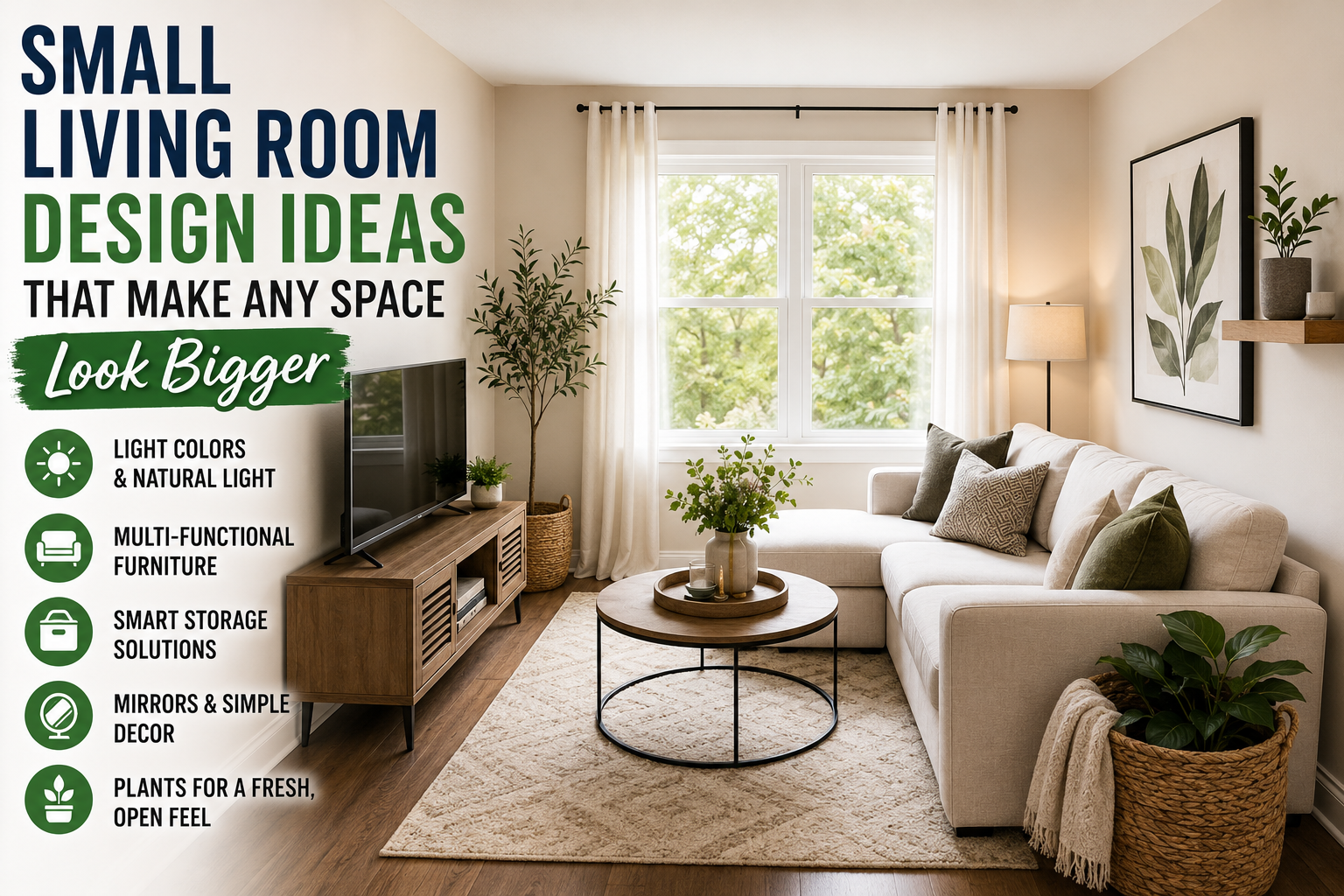
If you’ve ever walked into a small living room and wished it felt a little more open, you’re definitely not alone.
Many people believe that creating a beautiful living room requires a large space and expensive furniture. The truth is quite different. Some of the most stylish and inviting living rooms are actually small spaces designed thoughtfully.
A friend of mine recently moved into a compact apartment and was worried that her living room felt cramped. After making a few simple changes, the room looked brighter, more organized, and surprisingly larger than before. The best part? She didn’t knock down walls or spend a fortune on renovations.
The secret wasn’t having more space. It was using the available space more intelligently.
Whether you live in a small apartment, a cozy house, or simply want to make your living room feel more spacious, the right design choices can make a huge difference.
Let’s explore some practical small living room design ideas that can help any space feel larger, brighter, and more comfortable.
Choose Light Colors for Walls
Color has a powerful effect on how large a room feels.
Light shades such as:
- White
- Cream
- Soft gray
- Light beige
- Pale blue
reflect more natural light and create an open appearance.
Dark colors can look beautiful, but they often make smaller rooms feel more enclosed.
If your goal is to maximize visual space, lighter wall colors are usually the safest choice.
Use Multi-Functional Furniture
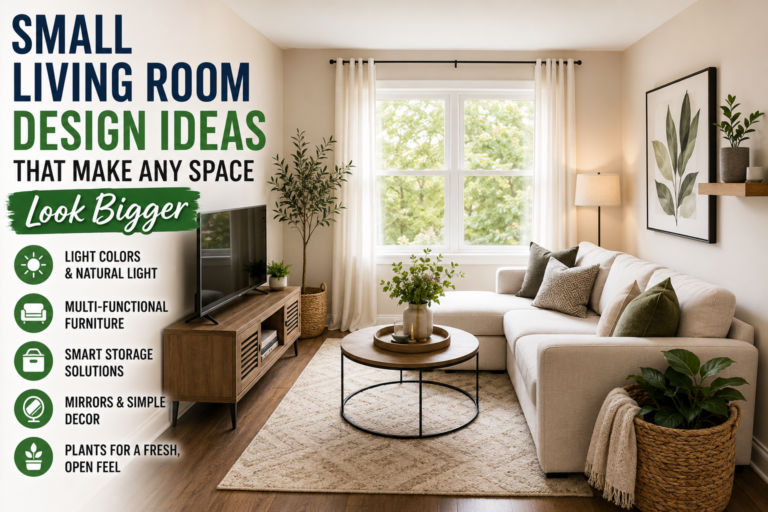
One of the smartest strategies for small living rooms is choosing furniture that serves multiple purposes.
Examples include:
- Storage ottomans
- Sofa beds
- Coffee tables with storage
- Nesting tables
- Storage benches
These pieces help reduce clutter while maximizing functionality.
In small spaces, every piece of furniture should earn its place.
Let Natural Light In
Natural light instantly makes a room feel larger and more welcoming.
Avoid blocking windows with heavy curtains or oversized furniture.
Instead, consider:
- Sheer curtains
- Light-colored blinds
- Minimal window coverings
The more sunlight that enters the room, the more spacious it will appear.
One simple change like replacing dark curtains can dramatically improve the feel of a room.
Add Mirrors Strategically
Interior designers have used mirrors for decades to create the illusion of space.
A large mirror reflects both light and surrounding elements, making the room feel more open.
Popular placements include:
- Opposite a window
- Above a sofa
- Near natural light sources
A well-positioned mirror can sometimes make a room appear almost twice as large.
Choose Furniture with Visible Legs
Bulky furniture that sits directly on the floor can make a room feel crowded.
Furniture with visible legs creates a sense of openness because more floor space remains visible.
Consider:
- Raised sofas
- Modern chairs
- Open-frame tables
This simple design trick helps maintain visual flow throughout the room.
Keep the Layout Simple
Many people try to fit too much furniture into a small living room.
Unfortunately, this often has the opposite effect.
Instead of filling every corner, focus on essential pieces.
Ask yourself:
- Do I really need this item?
- Does it serve a purpose?
- Is it making the room feel crowded?
A cleaner layout often feels larger and more comfortable.
Use Vertical Space
When floor space is limited, look upward.
Vertical storage solutions can provide extra space without taking up valuable room.
Ideas include:
- Floating shelves
- Wall-mounted cabinets
- Tall bookcases
- Decorative wall storage
Using walls effectively helps keep floors clear and organized.
Create Smart Storage Solutions
Clutter is one of the biggest reasons small rooms feel smaller.
Even a beautifully designed space can feel cramped when items are scattered everywhere.
Practical storage ideas include:
- Storage baskets
- Hidden compartments
- Built-in shelving
- Decorative storage boxes
Keeping everyday items organized creates a cleaner and more spacious environment.
Choose the Right Rug Size
Many homeowners accidentally choose rugs that are too small.
A larger rug can actually make a room feel bigger because it visually connects furniture pieces together.
The rug should be large enough to anchor the seating area rather than floating awkwardly in the center of the room.
This creates a more balanced and cohesive appearance.
Incorporate Minimalist Decor
Decor is important, but too many decorative items can overwhelm a small room.
A few carefully chosen pieces often create a stronger visual impact than dozens of accessories.
Consider:
- One large artwork instead of several small frames
- Simple decorative plants
- Elegant lighting fixtures
- Neutral decorative accents
Less clutter allows the room itself to stand out.
Add Indoor Plants
Plants bring life and freshness into any space.
Even small plants can make a room feel more inviting and vibrant.
Popular choices include:
- Snake plants
- Pothos
- Peace lilies
- Small palm varieties
Besides improving aesthetics, plants also create a more relaxing atmosphere.
Use Glass and Transparent Furniture
Glass furniture helps maintain visual openness.
Unlike solid furniture, transparent pieces don’t block sight lines.
Examples include:
- Glass coffee tables
- Acrylic chairs
- Glass shelving
These options provide functionality while helping the room feel less crowded.
Focus on Lighting Layers
Good lighting can completely transform a living room.
Instead of relying on a single ceiling light, combine different light sources.
Consider:
- Floor lamps
- Table lamps
- Wall sconces
- Accent lighting
Layered lighting adds depth and makes the room feel larger during both day and night.
Common Mistakes to Avoid
Using Oversized Furniture
Large furniture can quickly dominate a small room.
Choose pieces that fit the scale of the space.
Ignoring Storage
Without proper storage, clutter builds up quickly.
Blocking Windows
Natural light is one of the most effective ways to make a room feel bigger.
Overdecorating
Too many decorative items can create visual clutter.
Sometimes simplicity is the best design choice.
FAQ
1. What color makes a small living room look bigger?
Light colors such as white, beige, cream, and soft gray help create a more spacious appearance.
2. Are mirrors good for small living rooms?
Yes. Mirrors reflect light and create the illusion of additional space.
3. How can I add storage to a small living room?
Use storage ottomans, floating shelves, storage benches, and multifunctional furniture.
4. Should I use large or small furniture?
Choose furniture that fits the scale of your room. Oversized furniture can make small spaces feel cramped.
5. What is the easiest way to make a room look bigger?
Improving natural light, reducing clutter, and using lighter colors are some of the simplest and most effective solutions.
Conclusion
A small living room doesn’t have to feel cramped or limiting. With thoughtful design choices, even the most compact space can feel bright, open, and comfortable.
Simple changes such as using lighter colors, adding mirrors, choosing multifunctional furniture, and reducing clutter can dramatically improve the appearance of a room.
The goal isn’t necessarily to make the room physically larger. The goal is to make it feel larger, more functional, and more enjoyable to spend time in.
When space is used wisely, small living rooms can be just as beautiful and practical as much larger ones.
Related Resources
Daily Nest:
https://dailynest.tech/
MegaDealsHub24:
https://megadealshub24.blogspot.com/?m=1
About the Author