Introduction
Staying hydrated sounds simple, but for many people, it isn’t.
Busy work schedules, long study sessions, gym workouts, and daily responsibilities often make it easy to forget something as basic as drinking enough water. As a result, dehydration has become surprisingly common among students, professionals, and even fitness enthusiasts.
To solve this problem, manufacturers have introduced a new type of product: the smart water bottle.
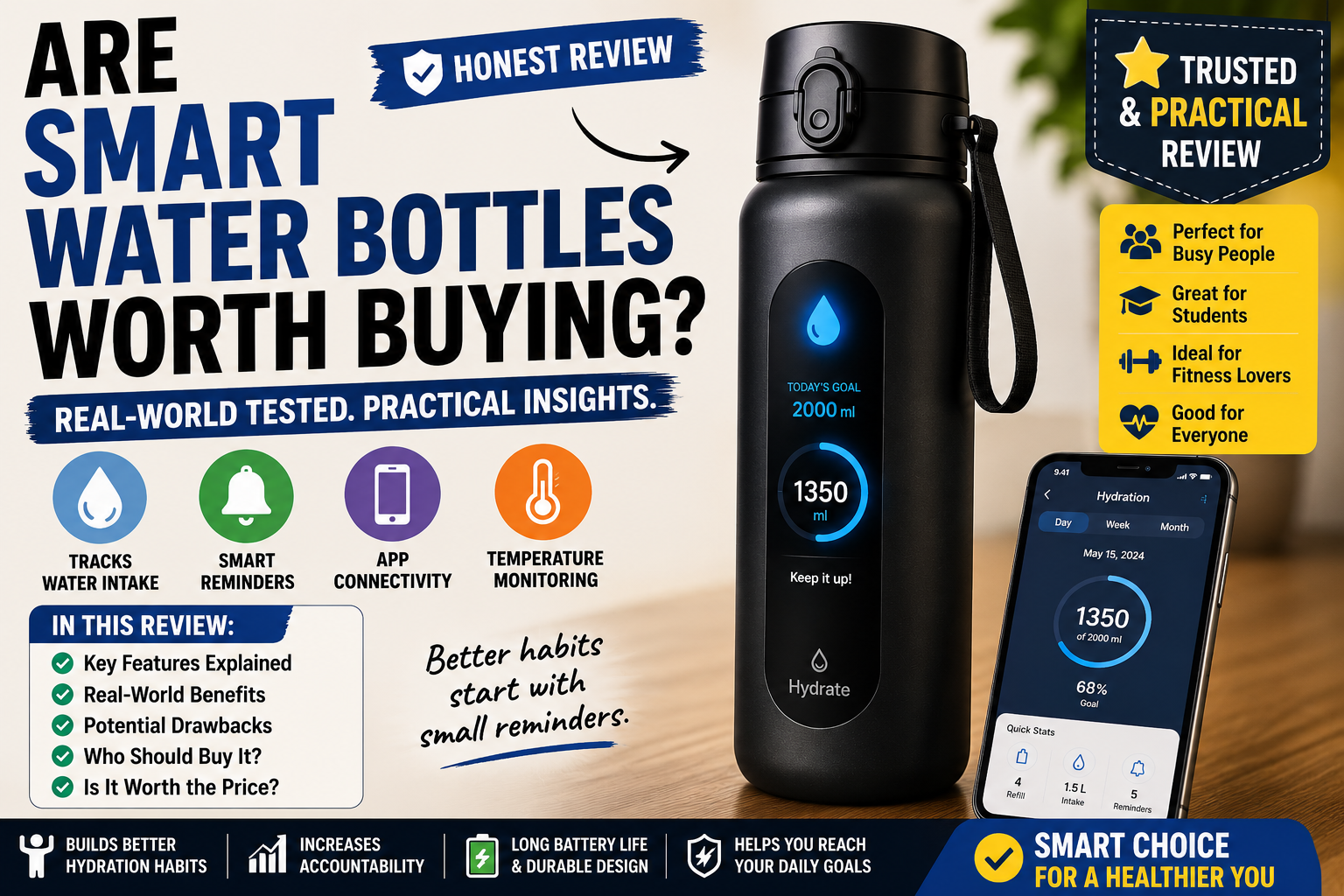
Unlike traditional water bottles, smart water bottles can track water intake, send reminders, monitor hydration goals, and even connect with smartphones.
At first glance, this may sound unnecessary.
After all, do people really need technology to remind them to drink water?
The answer depends on how often you struggle with hydration and whether the added features provide enough value for your lifestyle.
This review takes a practical look at smart water bottles, their benefits, drawbacks, and whether they’re actually worth buying in 2026.
What Is a Smart Water Bottle?
A smart water bottle is a reusable bottle equipped with technology that helps users track hydration.
Depending on the model, features may include:
- Water intake tracking
- Hydration reminders
- Mobile app connectivity
- Temperature monitoring
- Daily hydration goals
- LED notifications
The main purpose is to encourage consistent water consumption throughout the day.
Why Smart Water Bottles Are Becoming Popular
Health awareness has increased significantly in recent years.
People are paying more attention to:
- Fitness
- Nutrition
- Sleep
- Mental wellness
- Hydration
Many consumers already use:
- Smartwatches
- Fitness trackers
- Health apps
Smart water bottles fit naturally into this growing ecosystem of wellness-focused products.
Key Features Most Smart Water Bottles Offer
Hydration Reminders
One of the most useful features is automatic reminders.
Many smart bottles use:
- LED lights
- Mobile notifications
- Vibrations
to remind users when it’s time to drink water.
For busy professionals, this can be surprisingly helpful.
Water Intake Tracking
Many bottles automatically record how much water you consume throughout the day.
Instead of guessing, users can see accurate hydration data.
This information helps build healthier habits over time.
Smartphone Integration
Most modern smart bottles connect to mobile apps.
Users can:
- View hydration history
- Set goals
- Receive reminders
- Monitor daily progress
This creates a more personalized experience.
Temperature Monitoring
Some premium models track beverage temperature.
This feature is particularly useful for people who enjoy cold water throughout the day.
Real-World Benefits
After reviewing user experiences and common feedback, several benefits stand out.
Better Hydration Habits
Many users report drinking more water simply because reminders keep hydration visible throughout the day.
Small prompts often make a big difference.
Increased Accountability
Tracking progress creates awareness.
People are more likely to reach hydration goals when they can see measurable results.
Helpful for Busy Schedules
Students, office workers, and remote employees often become focused on tasks and forget basic wellness habits.
Automatic reminders help address this problem.
Encourages Healthier Routines
Hydration often improves:
- Energy levels
- Concentration
- Physical performance
A smart bottle can serve as a simple wellness tool.
Potential Drawbacks
No product is perfect.
Smart water bottles also have limitations.
Higher Cost
The biggest disadvantage is price.
A standard reusable water bottle is much cheaper.
Consumers must decide whether smart features justify the additional expense.
Battery Requirements
Some smart bottles require charging.
For certain users, this may feel inconvenient.
App Dependency
Many features rely on smartphone apps.
People who prefer simplicity may not enjoy managing another connected device.
Limited Necessity
Some users quickly realize they can simply set reminders on their phones instead.
In these cases, the value of a smart bottle becomes less convincing.
Who Should Consider Buying One?
Smart water bottles may be worthwhile for:
Fitness Enthusiasts
People who actively track health metrics often appreciate hydration tracking.
Busy Professionals
Work-focused individuals frequently forget to drink water.
Students
Long study sessions can make hydration easy to overlook.
Wellness-Focused Users
Anyone already using fitness trackers or health apps may find smart bottles useful.
Who Might Not Need One?
Smart water bottles may not be ideal for:
Minimalists
People who prefer simple products without technology.
Budget-Conscious Buyers
Traditional bottles offer excellent value.
Naturally Consistent Water Drinkers
If you already drink enough water daily, the benefits may be limited.
Smart Water Bottle vs Traditional Water Bottle
Smart Water Bottle
Pros:
- Tracks hydration
- Sends reminders
- Connects to apps
- Encourages healthy habits
Cons:
- More expensive
- Requires charging
- Additional technology to manage
Traditional Water Bottle
Pros:
- Affordable
- Simple
- No charging required
Cons:
- No tracking
- No reminders
The best option depends on personal preferences.
Are Smart Water Bottles Worth the Money?
For some users, yes.
If hydration is a constant challenge, reminders and tracking can genuinely improve daily habits.
However, if you already maintain good hydration habits, a traditional bottle may provide similar practical benefits at a lower cost.
The value comes from behavior change rather than technology itself.
The most successful users are often those who need extra motivation and accountability.
Practical Buying Tips
Before purchasing a smart water bottle, consider:
Battery Life
Longer battery life improves convenience.
App Quality
A poor mobile app can reduce the overall experience.
Build Quality
Choose durable materials designed for daily use.
Ease of Cleaning
A water bottle should be easy to maintain.
Price
Compare features carefully before paying premium prices.
FAQ
1. Do smart water bottles actually work?
Yes. Many users report improved hydration habits due to reminders and tracking features.
2. Are smart water bottles worth buying?
They can be worthwhile for people who frequently forget to drink water.
3. Do smart water bottles require charging?
Many models do, although battery life varies significantly.
4. Can a phone reminder replace a smart water bottle?
In some cases, yes. However, integrated tracking and dedicated reminders may provide additional motivation.
5. Who benefits most from smart water bottles?
Students, professionals, fitness enthusiasts, and wellness-focused users often gain the most value.
Conclusion
Smart water bottles may seem like a simple gadget, but they address a real problem that many people face: staying properly hydrated.
While they are not essential for everyone, they can be surprisingly useful for individuals who struggle to maintain consistent hydration habits.
The biggest factors to consider are price, convenience, and personal lifestyle.
For users seeking accountability and wellness tracking, a smart water bottle can be a valuable addition to daily routines. For others, a traditional reusable bottle may remain the more practical choice.
Ultimately, the best water bottle is the one that helps you drink enough water every day.
Related Resources
Daily Nest
https://dailynest.tech/
About the Author