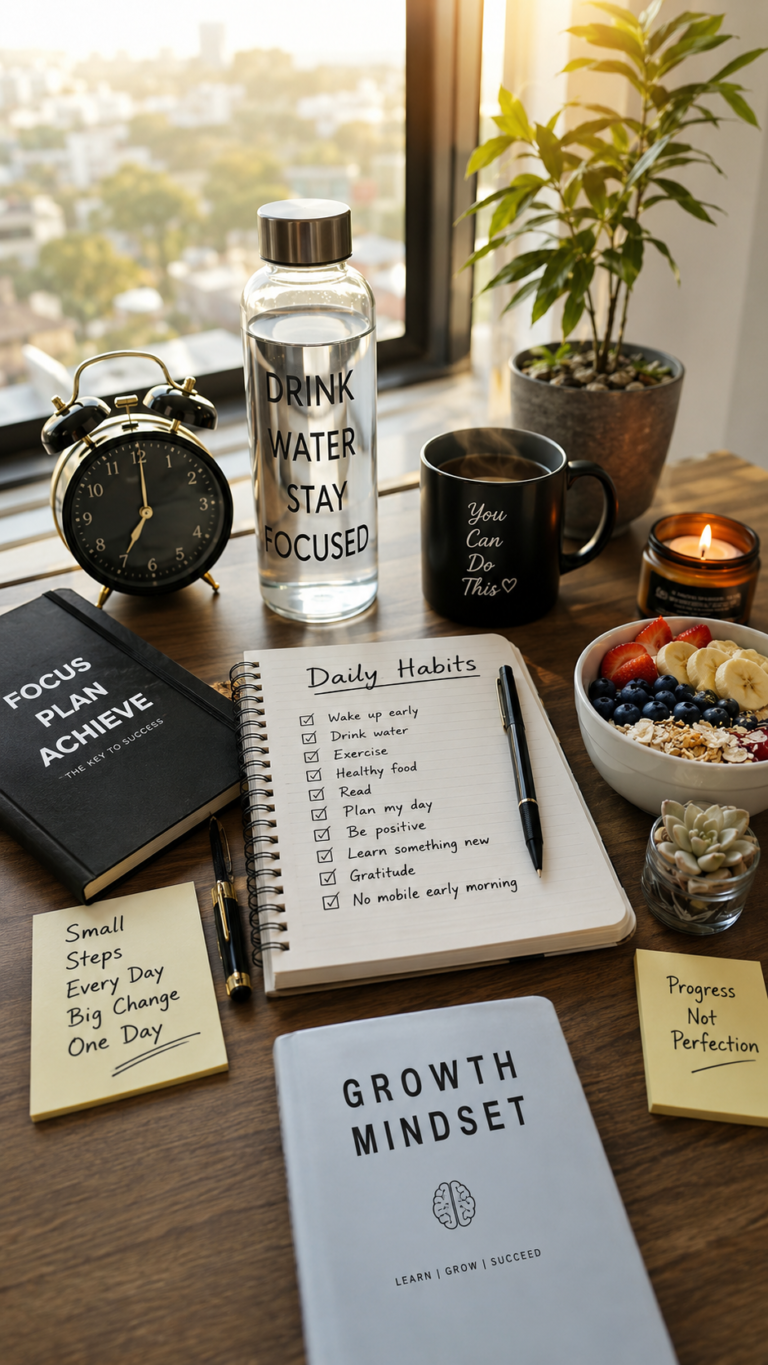
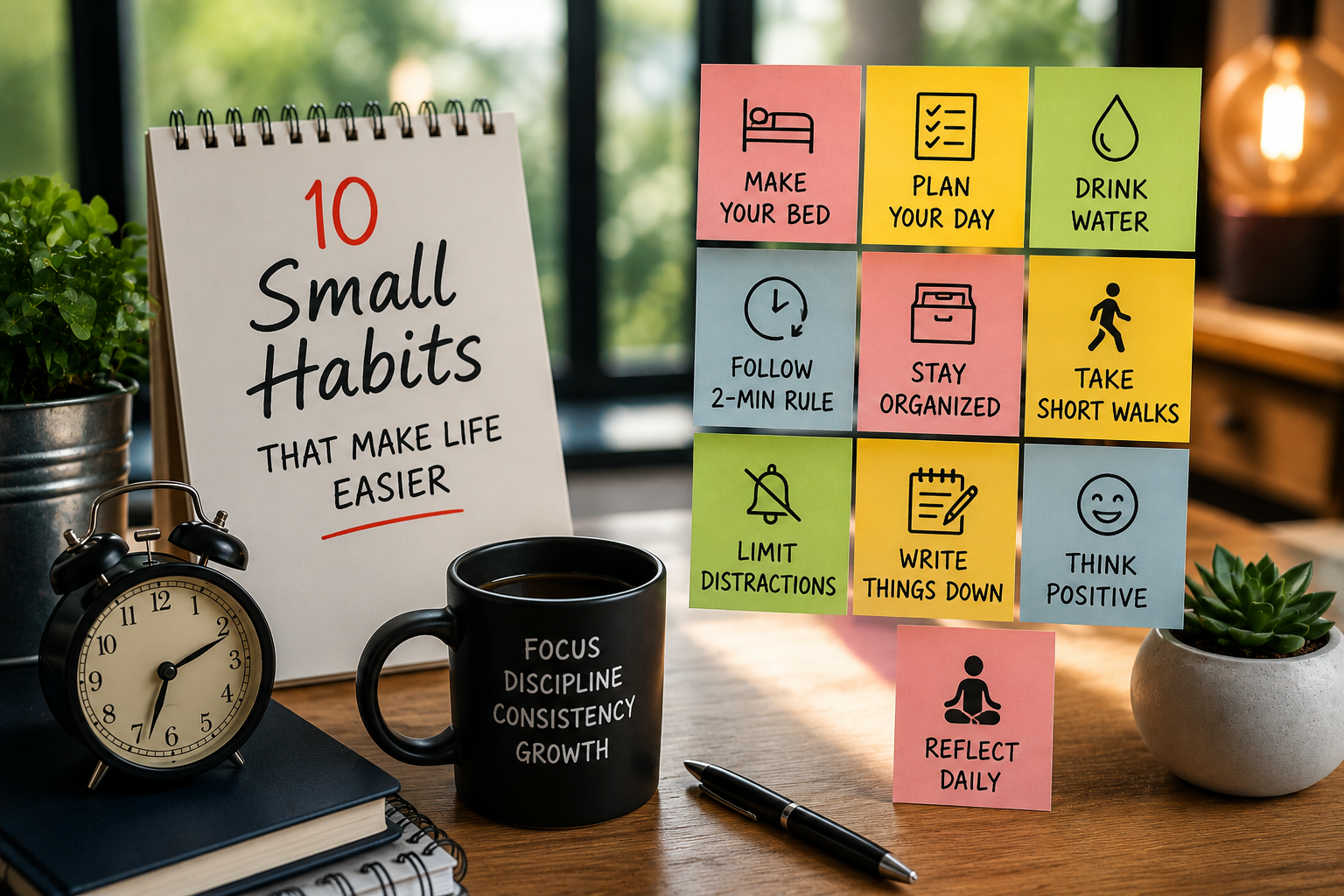
Small daily habits such as planning ahead, staying organized, drinking water, and reducing distractions can improve productivity and make everyday life easier without spending money.
Most people believe improving life requires spending more money
A new gadget a productivity app a gym membership or another self-improvement purchase often seems like the answer While some investments can help many of the habits that make life easier are completely free
In fac small daily habits often have a bigger impact than expensive solutions.
The best part?
Anyone can start them today
Here are 10 simple habits that can reduce stress save time improve productivity and make everyday life feel a little easier
1. Make Your Bed Every Morning
It sounds simple but starting the day with one completed task creates a sense of accomplishment
A tidy bed instantly makes a room feel cleaner and more organized
It only takes a minute or two but can positively affect your mindset for the rest of the day
2. Prepare for Tomorrow Before Sleeping
Many people start the morning feeling rushed
Taking five minutes before bed to prepare for the next day can make a huge difference
You can
- Choose your clothes
- Organize your bag
- Review your schedule
- Write a short to-do list
This reduces morning stress and helps you start the day with clarity.
3. Drink Water After Waking Up
After several hours of sleep, your body needs hydration.
A simple glass of water in the morning can help you feel more alert and energized.
It’s one of the easiest healthy habits anyone can adopt.
4. Follow the Two-Minute Rule
If a task takes less than two minutes to complete do it immediately
Examples include
- Replying to a simple email
- Washing a dish
- Putting something away
- Scheduling an appointment
Small tasks often become bigger sources of stress when they pile up
5. Put Things Back Where They Belong
Many people waste time searching for keys chargers, wallets or important documents
Creating a habit of returning items to the same place saves time and frustration
Organization doesn’t have to be complicated
Consistency is what matters
6. Take Short Walks
You don’t need an expensive fitness plan to feel better
A short walk can
- Improve mood
- Reduce stress
- Increase energy
- Clear your mind
Even ten minutes of walking can make a noticeable difference.
7. Limit Unnecessary Notifications
Constant notifications can interrupt focus throughout the day.
Many alerts aren’t truly important.
Reducing unnecessary notifications helps
- Improve concentration
- Lower stress
- Reduce distractions
Your attention is valuable
Protect it
8. Write Down Important Thoughts
Trying to remember everything creates mental clutter
Keep a simple notebook or notes app for
- Ideas
- Reminders
- Goals
- Tasks
Writing things down frees mental space and reduces the fear of forgetting something important.
9. Spend Less Time Complaining
Everyone faces challenges.
However constantly focusing on problems rarely improves them.
Instead of asking:
Why is this happening to me?
Try asking:
What can I do about it?
This shift in mindset often leads to better solutions and less stress.
10. Spend a Few Minutes Reflecting Each Day
Reflection helps transform daily experiences into valuable lessons.
Before bed, ask yourself:
- What went well today?
- What did I learn?
- What can I improve tomorrow?
A few minutes of reflection can lead to better decisions and personal growth over time.
Why Small Habits Matter
Many people underestimate the power of small actions.
The reality is that life often improves gradually rather than suddenly.
Tiny habits repeated every day create meaningful long-term results.
A five-minute habit may not seem important today.
But after months or year the impact becomes significant.
Common Mistakes People Make
Trying to Change Everything at Once
Focus on one or two habits first.
Expecting Immediate Results
Good habits usually work through consistency.
Being Too Hard on Yourself
Missing a day doesn’t mean you’ve failed.
Simply continue the next day.
Ignoring Small Wins
Small improvements often lead to bigger changes over time.
FAQ
Do small habits really make a difference?
Yes. Consistent daily actions often create significant long-term improvements.
How long does it take to build a habit?
The timeline varies, but consistency is more important than speed.
Which habit should I start with first?
Choose the easiest habit that feels realistic for your lifestyle.
Do habits need to be complicated?
No. The simplest habits are often the easiest to maintain.
Why do people struggle with habits?
Many people try to change too much at once or expect immediate results.
Conclusion
Making life easier doesn’t always require spending money or making dramatic changes.
Simple habits like staying organized, preparing ahead, drinking more water, taking short walks, reducing distractions, and reflecting on your day can create meaningful improvements over time.
The key is consistency.
Small habits may seem insignificant in the moment, but they often become the foundation of a happier, healthier, and less stressful life.
About the Author