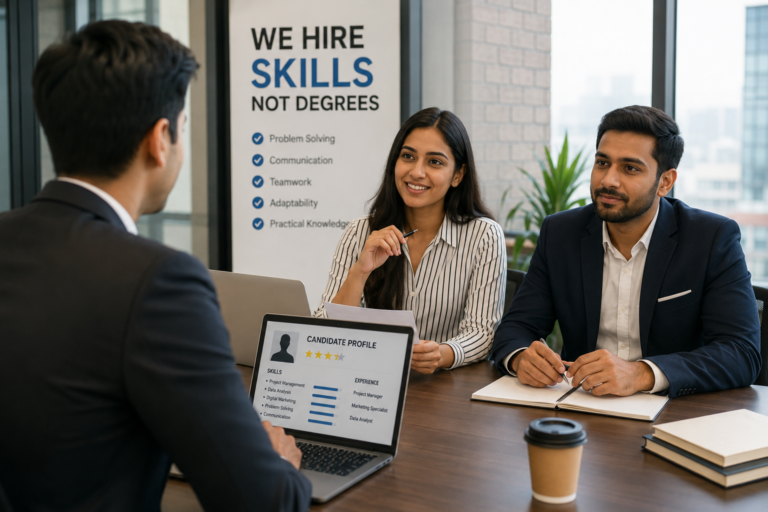
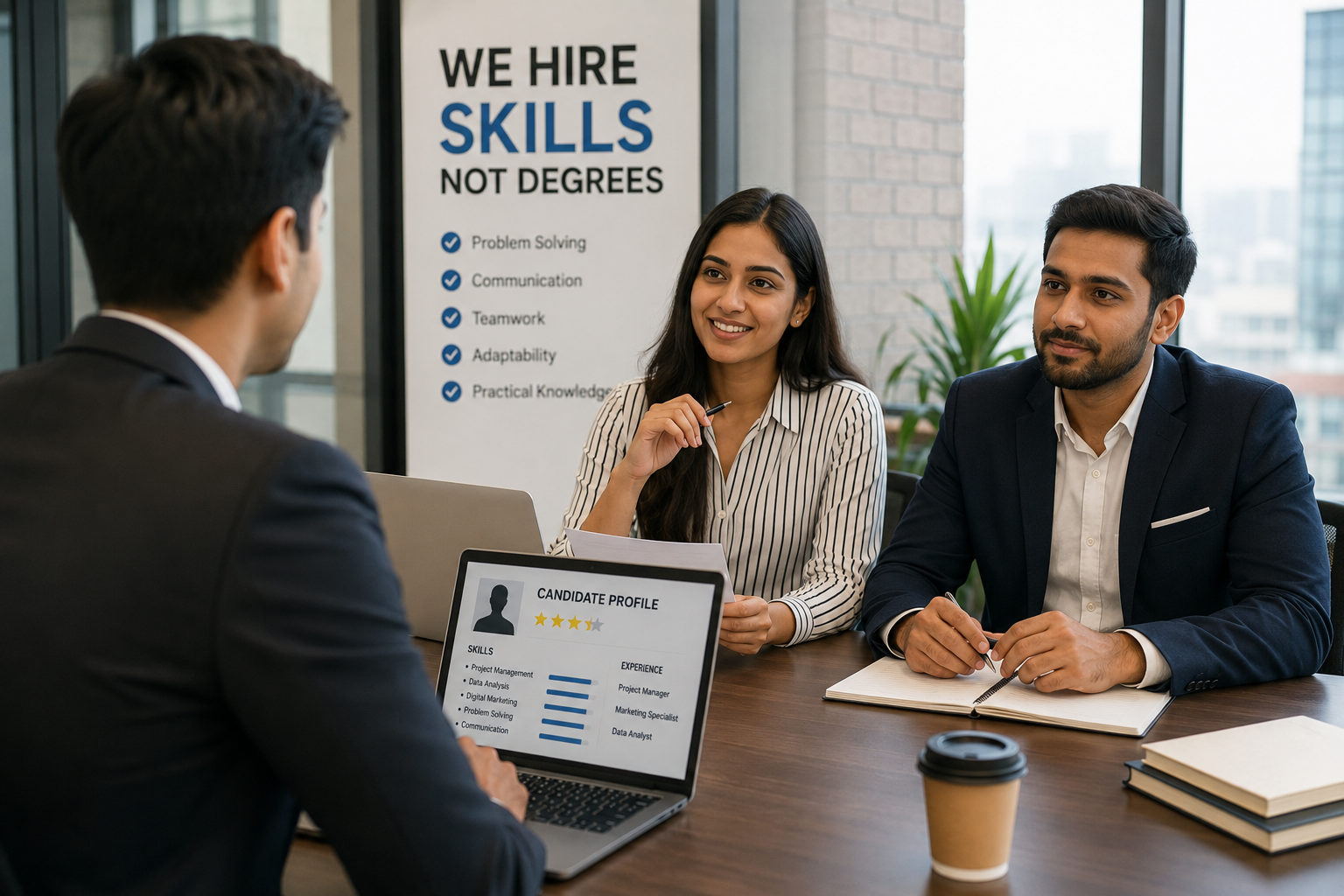
Companies are increasingly adopting skills based hiring practices, prioritizing real world abilities, communication skills, and practical experience over traditional degree requirements.
The job market is changing faster than ever
For many years a college degree was considered one of the most important requirements for getting a good job
Employers often used degrees as a way to evaluate candidates and narrow down applications
But things are starting to change
In 2026 more companies are focusing on what people can actually do rather than where they studied
Skills experience and real world knowledge are becoming more important in many industries
As a result a growing number of employers are hiring based on abilities instead of academic qualifications alone
But why is this happening
And what does it mean for job seekers
Let us take a closer look
What Is Skills Based Hiring
Skills based hiring is an approach where employers focus on a candidate’s abilities rather than only looking at degrees or academic backgrounds
Instead of asking
What university did this person attend
Companies are asking
Can this person perform the job successfully
This shift allows employers to identify talented individuals who may not have traditional educational credentials but possess valuable skills
Examples include
- Technical abilities
- Communication skills
- Leadership experience
- Problem solving
- Project management
- Creative thinking
Many organizations now consider these skills just as important as formal education
Why Companies Are Making This Change
Several factors are driving this trend
One major reason is the growing demand for talent
Many industries are facing skill shortages
Companies need qualified workers and are expanding their hiring criteria to find the right candidates
Another reason is that technology changes quickly
Skills learned through practical experience often stay more relevant than information learned years ago in a classroom
Employers are increasingly looking for people who can adapt and learn continuously
The Rise of Online Learning
Online education has transformed how people gain knowledge
Today individuals can learn valuable skills through
- Online courses
- Professional certifications
- Workshops
- Training programs
- Industry projects
Many of these learning opportunities are affordable and accessible
As a result people can develop job ready skills without following traditional educational paths
Employers are beginning to recognize the value of alternative learning methods
Technology Is Accelerating the Trend
Technology companies have been among the first to embrace skills based hiring
Many tech employers now focus heavily on portfolios projects and practical experience
For example
A software developer who has built successful applications may be considered highly qualified even without a traditional computer science degree
This mindset is gradually spreading to other industries as well
Businesses want proof of ability
Not just proof of education
Benefits for Employers
Skills based hiring offers several advantages for companies
Access to More Talent
Employers can consider candidates from a wider range of backgrounds
This increases the number of qualified applicants
Better Job Performance
Candidates selected for their practical abilities often perform well because they have already demonstrated relevant skills
Increased Diversity
Removing unnecessary degree requirements can create opportunities for people from different educational and professional backgrounds
Faster Hiring Decisions
Employers can focus directly on skills that matter for specific roles
This often simplifies the recruitment process
Benefits for Job Seekers
The shift toward skills based hiring creates new opportunities for workers
More Career Options
People without traditional degrees may gain access to positions that were previously difficult to obtain
Greater Focus on Results
Employers care more about what candidates can accomplish
This rewards practical knowledge and experience
Continuous Learning Matters
Individuals who invest in developing new skills can improve career prospects regardless of educational background
Faster Career Growth
Demonstrating valuable skills can sometimes lead to opportunities that would have previously required additional qualifications
Skills Employers Value Most in 2026
While technical skills remain important many companies are also prioritizing human skills
Some of the most valuable include
Communication
Clear communication remains one of the most requested workplace skills
Problem Solving
Employers value people who can identify challenges and develop solutions
Adaptability
The ability to learn and adjust to changing situations is increasingly important
Teamwork
Successful collaboration helps organizations achieve better results
Digital Literacy
Understanding modern technology is becoming essential across many industries
Does This Mean Degrees No Longer Matter
Not at all
Degrees still provide value in many professions
Fields such as medicine law engineering and certain scientific careers continue to require formal education
However many employers now view degrees as one qualification among many rather than the only path to success
Skills experience and personal achievements are playing a larger role in hiring decisions
For many positions a strong portfolio and proven abilities may be just as important as academic credentials
How Job Seekers Can Prepare
People who want to benefit from this trend should focus on building practical skills
Some useful strategies include
Create Real Projects
Projects demonstrate abilities better than claims on a resume
Earn Certifications
Industry certifications can strengthen credibility
Build a Portfolio
Showcasing completed work helps employers evaluate skills
Continue Learning
Technology and industries change constantly
Lifelong learning is becoming essential
Develop Soft Skills
Communication leadership and teamwork remain highly valuable
The Future of Hiring
Many experts believe skills based hiring will continue expanding in the coming years
Employers are becoming more interested in results than traditional credentials alone
As technology evolves and alternative education grows more accessible hiring practices are likely to become increasingly focused on abilities and performance
This does not mean degrees will disappear
But it does mean they may no longer be the only path to career success
FAQ
What is skills based hiring
Skills based hiring focuses on a candidate’s abilities and experience rather than relying primarily on academic degrees
Why are companies hiring skills over degrees
Many employers want practical abilities that directly match workplace needs
Do degrees still matter in 2026
Yes degrees remain valuable especially in specialized professions but skills are becoming increasingly important
Can online courses help people get jobs
Many employers now recognize certifications and practical learning gained through online education
What skills are most important today
Communication problem solving adaptability teamwork and digital literacy are among the most valuable skills
Conclusion
The rise of skills based hiring is one of the most important workplace trends of 2026
Companies are increasingly looking beyond traditional qualifications and focusing on what candidates can actually contribute
While degrees continue to have value practical skills experience and continuous learning are becoming powerful advantages in the modern job market
For job seekers this shift creates new opportunities to build successful careers through knowledge effort and real world abilities
The future of hiring is becoming more flexible and for many people that is good news
About the Author